
Property management in Hanoi for an absentee owner covers tenant sourcing, rent collection, bills, repairs, inspections and monthly reporting in English. Cozyhome charges 4% of annual rent for it, across more than 360 apartments in 13 Hanoi buildings.
Owners living in Hong Kong, Singapore, Taiwan or Korea are buying local execution and clear reporting from afar. This guide explains what professional property management in Hanoi typically includes, why absentee owners need local execution, how remote reporting should work, and what to check before choosing a management partner.
Why Absentee Owners Need Professional Property Management
Owning at a distance fails in five specific places, and none of them is the part owners worry about before they buy:
- Everything runs in Vietnamese. The tenant, the building management office, the plumber and the electricity provider. Not some of them.
- Somebody has to be physically present. A contractor cannot be let in over WhatsApp. Building access has to be booked by a person the management office recognizes.
- Small problems compound while nobody looks. An air conditioner leaking behind a wall for four months is a repair. The same leak found at move-out is a repaint, a replaced floor and an argument about the deposit.
- Time zones turn hours into days. Hanoi is an hour behind Hong Kong and Singapore, two behind Seoul and Tokyo. That gap is survivable for approvals and useless for emergencies.
- Without a statement, you are guessing. Rent may have arrived. The bill may have been paid. An owner who finds out through occasional chat messages does not have visibility, only reassurance.
Professional management is not only about collecting rent. It is about keeping the apartment operational, documented, and protected while the owner is overseas.
Hanoi Investment Context: Appreciation First, Yield Second
Gross apartment yield in Hanoi was 3.4% in 2025 according to CBRE, down from 5.1% in 2023. Yields compressed because prices rose 30–40% a year while rents rose 8–10%. Batdongsan, using its own listing data, puts Hanoi slightly above 3%.
Those are third-party market figures rather than ours, and they move with the cycle. They do set the frame for an absentee owner: rental income is there to carry the apartment through the holding period, not to be the reason for owning it.
That frame changes what management is for. If income were the thesis, the job would be maximizing rent. Because appreciation is the thesis, the job is making sure the apartment arrives at the exit in condition to sell, with a documented history behind it, having spent as few months empty as possible along the way.
What Property Management Should Include
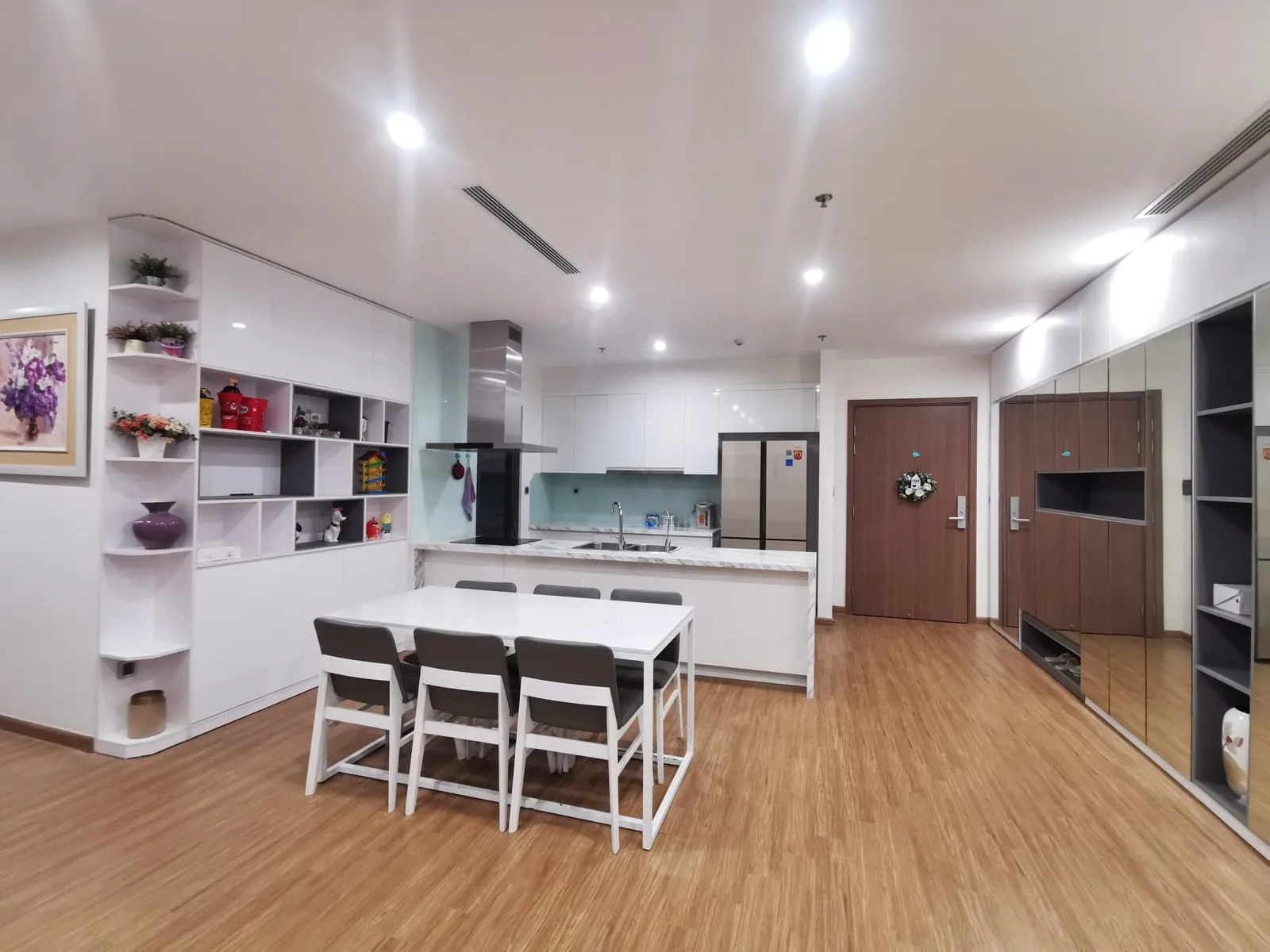
A managed unit in Vinhomes Skylake. Every apartment we run is documented at onboarding so condition disputes have a baseline.
Finding and Screening the Tenant
The listing, the viewings and the inquiries are the visible part. Screening is the part that decides your next two years.
Tenant quality shows up as maintenance load, message volume and vacancy, in that order. A tenant who reports a leak in week one saves you a floor. A tenant who leaves after eleven months costs you a vacant month plus a re-letting fee, roughly 17% of a year’s rent, which is more than four years of our management fee.
Rent Tracking and the Monthly Statement
Once a month, on schedule, you should receive rent received, itemized expenses with receipts, what needed maintenance, the net figure reaching you, and anything waiting on your decision.
Judge a reporting system by what it does in a bad month. When rent is late, the statement should say so on time. Reporting that goes quiet exactly when something is wrong is worse than no reporting, because silence reads as fine. The sequence that follows a missed month, and why the deposit stops covering it by month three, is in what happens if my Hanoi tenant stops paying rent.
Maintenance, and the Threshold You Set
This is where distance actually hurts. The manager takes the tenant’s request, judges how urgent it is, gets a quote, and either acts or asks you first depending on a figure you agreed in advance.
Set that figure yourself. Too low and you approve tap washers from another country. Too high and someone spends your money on a judgment call you would have made differently. Genuine emergencies override it, because a burst pipe at 2am does not wait for Hong Kong to wake up.
We add no percentage on top of repair invoices. A manager who takes a cut of every contractor bill is paid to find work for contractors.
Inspections That Produce a Record
Inspections matter less for catching problems than for building the file. Photographs at onboarding, at move-in, at move-out and periodically through a long tenancy.
That file settles deposit disputes, and years later it is what you hand a buyer’s agent to show the apartment was looked after. An owner who sells with no maintenance history negotiates from a weaker position than one who can show it.
Tenant Communication in Vietnamese
Repair requests, lease renewals, building notices, utility queries and move-out. All of it handled locally, with your inbox reserved for decisions.
How Onboarding Actually Runs
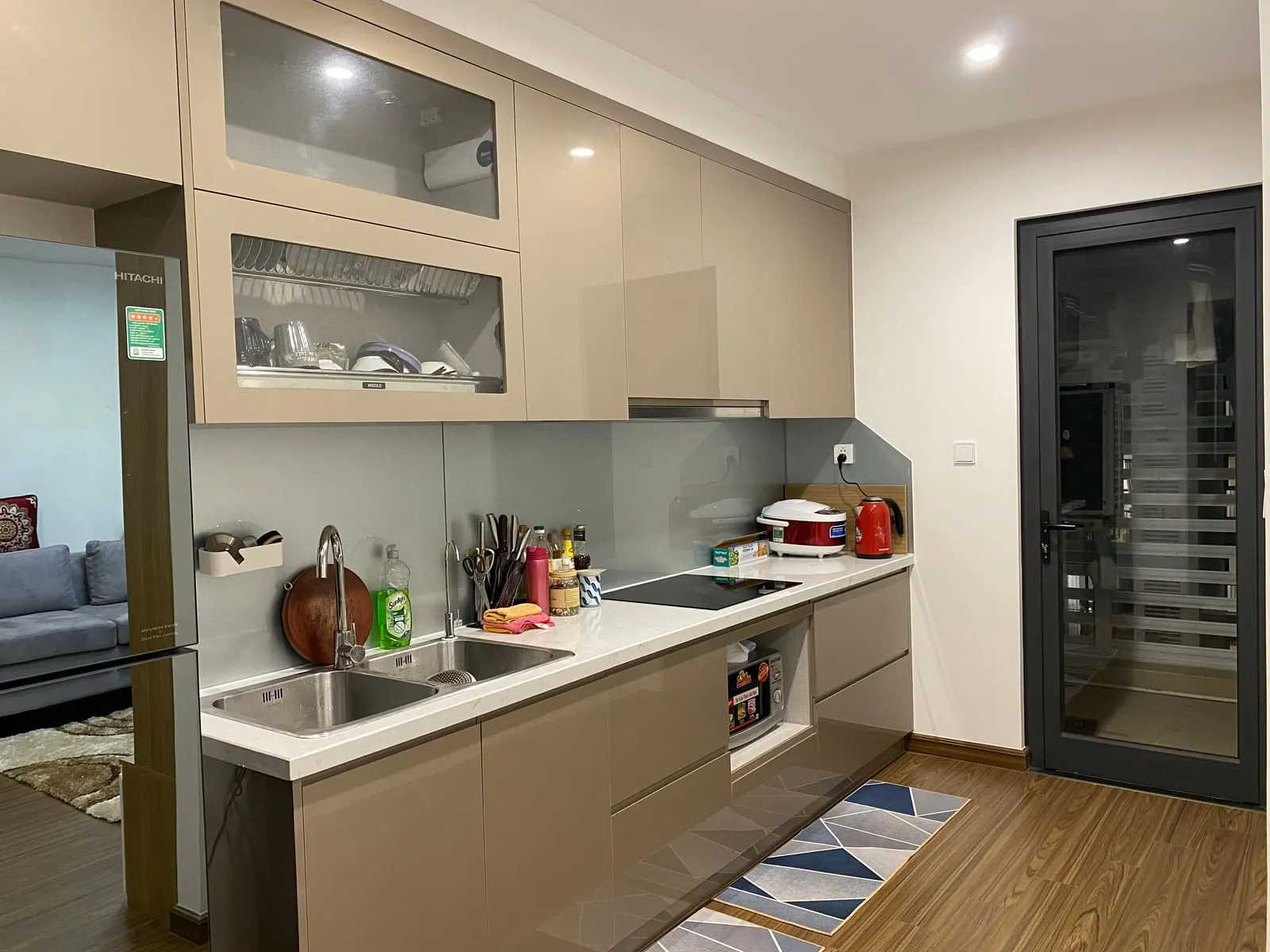
Inspections are photo-documented and sent with the monthly statement. This unit is in Vinhomes West Point.
Taking on an apartment runs in a fixed order, and the sequence matters more than the speed:
- Documents and keys. Ownership certificate, existing lease if there is one, keys, access cards, parking cards, and the building management contact.
- Condition baseline, before anything else. Every room photographed, meter readings logged, defects listed. Nothing that happens later can be argued about without this.
- Operating rules agreed with you. Your repair approval threshold, who signs a lease, how you want to be reached, and what counts as an emergency.
- Tenant handover or tenant search. An existing tenant is introduced to us and to the new payment and reporting arrangement. An empty unit goes to furnishing and listing. Where the tenant is coming from another manager, the transfer file matters more than the introduction: switching property managers without losing the tenant.
- First monthly statement. From then on it arrives on the same schedule whether the news is good or not.
We work with owners over WhatsApp, email and Zoom. Statements and financial summaries are in English.
What to Ask Before You Choose a Manager
Five questions separate managers in Hanoi. Ask them in this order and the answers to the middle two tell you the most:
- Is the fee on annual rent or on rent collected? Ours is 4% of annual rent. The distinction changes what the manager is optimizing for.
- Is there a markup on repairs? Ask for the number. “We pass through cost” and “we add 15%” are different businesses.
- What is the approval threshold, and who sets it? If the manager sets it rather than you, it is their threshold.
- What does the monthly statement look like? Ask to see a real one with the names removed. A manager who cannot produce a sample does not produce statements.
- Which buildings do you already work in? A manager already operating in your block knows the management office, the access rules and what comparable units let for. One who is not will learn on your apartment.
Property Management Fees: What Owners Should Understand
Here is what we charge, so you have something to compare against.
| Service | Cozyhome |
|---|---|
| Property management | 4% of annual rent. No setup fee, and no percentage added on top of repairs |
| Tenant sourcing | One month’s rent, due when a tenant signs. If we do not find a tenant, there is nothing to pay |
| Furnishing packages | From $4,000 for a one-bedroom, $5,000 for two, $6,000 for three |
Full detail is on the pricing page. Who carries each fee in a Hanoi letting, including the agent fee that sits with the landlord here, is in who pays the property management fee.
Two lines in that table matter more than the headline percentage. A fee charged as a percentage of annual rent does not rise when your apartment sits empty, unlike a fee on collected rent. And a manager who takes a cut of every repair has a quiet incentive that a manager who does not take one lacks.
When you compare quotes, those are the questions to put to any manager in Hanoi:
- Is the fee calculated on annual rent or on rent actually collected?
- Is there a markup on repairs and contractor invoices, and what is it?
- What is the spending threshold above which you need my written approval?
- Is the tenant sourcing fee payable on signature, or on introduction?
- What is billed separately that I have not asked about?
Vague answers to the second and third questions are the ones that cost money later.
What the Law Requires of a Foreign Landlord
The tax position for a landlord changed at the end of 2025, and it changed in the owner’s favor.
The old rule in Circular 40/2021/TT-BTC charged 5% VAT plus 5% personal income tax on rental turnover once annual revenue passed VND 100 million, and it charged that on the whole turnover.
Two laws passed on 10 and 11 December 2025 replaced it. Law 149/2025/QH15 raised the VAT threshold for households and individuals to VND 500 million a year from 1 January 2026. Law 109/2025/QH15, the new Law on Personal Income Tax, raises the personal income tax threshold to the same VND 500 million from 1 July 2026, taxes leasing income at 5%, and applies that rate only to the portion of revenue above the threshold rather than to the whole amount.
VND 500 million works out at roughly USD 19,000 a year, or about USD 1,600 a month of rent at early-2026 rates. A large share of the one and two-bedroom apartments we manage let below that.
Separately, a foreign individual’s ownership term runs up to 50 years from certificate issuance, extendable once, under Article 20 of the Law on Housing 2023.
Whether any of this reaches you cleanly depends on the documents actually on file. Ownership certificate, lease, tax receipts and bank records are what a bank reconstructs when you ask to remit rent overseas, and keeping that set complete is the part of the job a manager can do for you. Sources: Baker McKenzie, January 2026 and EY Vietnam.
Your Address Changed in July 2025
One administrative change catches absentee owners specifically, because it happened while they were not in the country.
On 1 July 2025 Vietnam abolished the district tier of local government. Hanoi went from 526 commune-level units across 30 districts to 126 wards and communes. The old names survive as ward names, over different boundaries.
The practical effect is that the address on documents written before July 2025 no longer matches the address on documents written after it. New leases, tax filings and utility accounts use the new ward. If you have not been in Hanoi since then, this has already happened to your apartment, and it is worth confirming that whoever handles your paperwork has caught up.
A property management company can help organize records and coordinate with qualified professionals, but it should not replace legal, tax, or banking advice.
Important: This article is general information only. Consult a qualified Vietnamese lawyer, licensed tax advisor, or relevant financial institution before making legal, tax, or remittance decisions.
Where We Actually Operate

Tay Ho Tay stock of the kind overseas owners hold. This one is in 6th Element.
We manage apartments in 13 Hanoi buildings, in three clusters:
- Tay Ho and Tay Ho Tay: Starlake, 6th Element, D’El Dorado I and D’El Dorado II.
- Cau Giay: Mipec Rubik 360, Sky Park Residence, The Nine and D’Capitale.
- My Dinh and western Hanoi: The Matrix One, Vinhomes Skylake, Vinhomes West Point, The Zei and My Dinh Pearl.
Depth in a small number of buildings is worth more to an overseas owner than a long list. In a building we already run, we know the management office, we know which contractors are allowed in and how access is booked, and we know what a comparable unit in the same block let for and how long it took. That is what shortens a vacancy.
There is a limit worth stating. We manage nothing east or north of the Red River, so for an apartment in Long Bien, Gia Lam or Dong Anh we have no local knowledge to offer.
The outcome to expect from management is operational control rather than a guaranteed return: fewer surprises, documentation you can hand to a buyer later, and a local response that does not wait for your time zone.
What Do Absentee Owners Ask Most?
Can I manage my Hanoi apartment myself from overseas?
Until something breaks, yes. The four things that stop working at distance are letting a contractor in, speaking Vietnamese to the building office, being reachable at 2am Hanoi time, and having a Vietnamese payment method for local bills. Most owners try it and stop after the first repair rather than the first tenancy.
How often should I receive reports?
Monthly, on a fixed schedule, whether or not there is news. Inspection photographs attach to the statement, with extra inspections at move-in, move-out and any major repair.
Can Cozyhome help if I do not have a tenant yet?
Yes. Tenant sourcing is one month’s rent, payable only when a tenant signs. If the apartment needs work before it can be listed, furnishing packages start at $4,000 for a one-bedroom.
Can rental income be transferred overseas?
Yes, where the documents support it: lease, tax receipts and the record of how the purchase money entered Vietnam. We keep that file in order. The bank and your tax advisor decide the specifics for your case.
What if my apartment is in a building you do not manage?
Say so when you contact us. In the 13 buildings we already operate in we know the management office, the access rules and what comparable units let for. Elsewhere we would be starting from zero on your apartment, and it is fairer to tell you that than to learn on it.
Next Step
Three things are worth knowing about your own apartment before you talk to anyone: whether there is a tenant and when the lease ends, when the unit was last inspected by someone who wrote it down, and whether your paperwork still carries the pre-July-2025 address.
Contact Cozyhome with the building name and we will tell you what managing it involves. See also Property Management and Legal & Financial Support.