
Gross rental yield on a Hanoi apartment was 3.4% in 2025, down from 5.1% in 2023, according to CBRE. That movement explains most of what a foreign investor needs to know about return in this market.
It is also the number to start from rather than the rent a broker quotes you. Yields did not fall because rents fell. They fell because prices climbed far faster than rents did. Understanding that gap is the difference between buying Hanoi for what it is and buying it for what a sales deck says it is.
The Yield Compression, in Numbers
CBRE data reported in August 2025 put Hanoi gross apartment yield at 3.4% and Ho Chi Minh City at 3.7%, against 5.1% for Hanoi in 2023. Batdongsan, working from its own listing data, put Hanoi slightly above 3%, down from 4.9% in early 2023.
The mechanism is in the same reporting: apartment prices rose 30–40% a year while rents rose 8–10%. Rent chased price and lost.
For an investor comparing Asian cities, CBRE’s regional figures set the context:
| City | Gross apartment yield |
|---|---|
| Bangkok | 6.2% |
| Kuala Lumpur | 5.1% |
| Seoul | 4.3% |
| Ho Chi Minh City | 3.7% |
| Hanoi | 3.4% |
If income is the objective, three of those cities pay better. Hanoi has to earn its place on the appreciation side of the ledger, and an honest case for it says so first.
What Appreciation Actually Did
CBRE’s Q4 2025 Hanoi figures show the citywide average primary price at VND 78 million per square meter, about USD 2,973, excluding VAT and maintenance fees and before discounts. That was 8% higher year on year.
The more interesting figure sits below it. Average secondary prices reached VND 62 million per square meter, up 24% year on year, having peaked at 26% growth in Q3. That is three times the 8% growth in primary prices.
That inversion matters for anyone modeling an exit. It suggests the buyer competing for your apartment in five years is competing in a market where completed, tenanted, well-run buildings command their own premium, separate from whatever the developer is launching that quarter.
Two cautions belong with those figures. Primary prices fell 14% quarter on quarter in Q4 2025, pulled down by a wave of cheaper suburban supply rather than by any single building losing value. And CBRE expects secondary price growth to come under pressure in 2026 as interest rates rise. These are market observations from CBRE, not Cozyhome forecasts, and they turn with the cycle.
Supply Is Not Scarce
Hanoi launched close to 36,000 condominium units in 2025, the second-highest annual total on record behind 2019, and sold 34,760. CBRE forecasts roughly 33,000 more in 2026. The luxury segment, above VND 120 million per square meter, hit a record 4,000 units, or 11% of the year’s supply.
An appreciation thesis built on “they aren’t making any more” does not survive those numbers. A thesis built on a specific building in a specific location with a specific tenant pool can.
From Gross Yield to What Reaches You
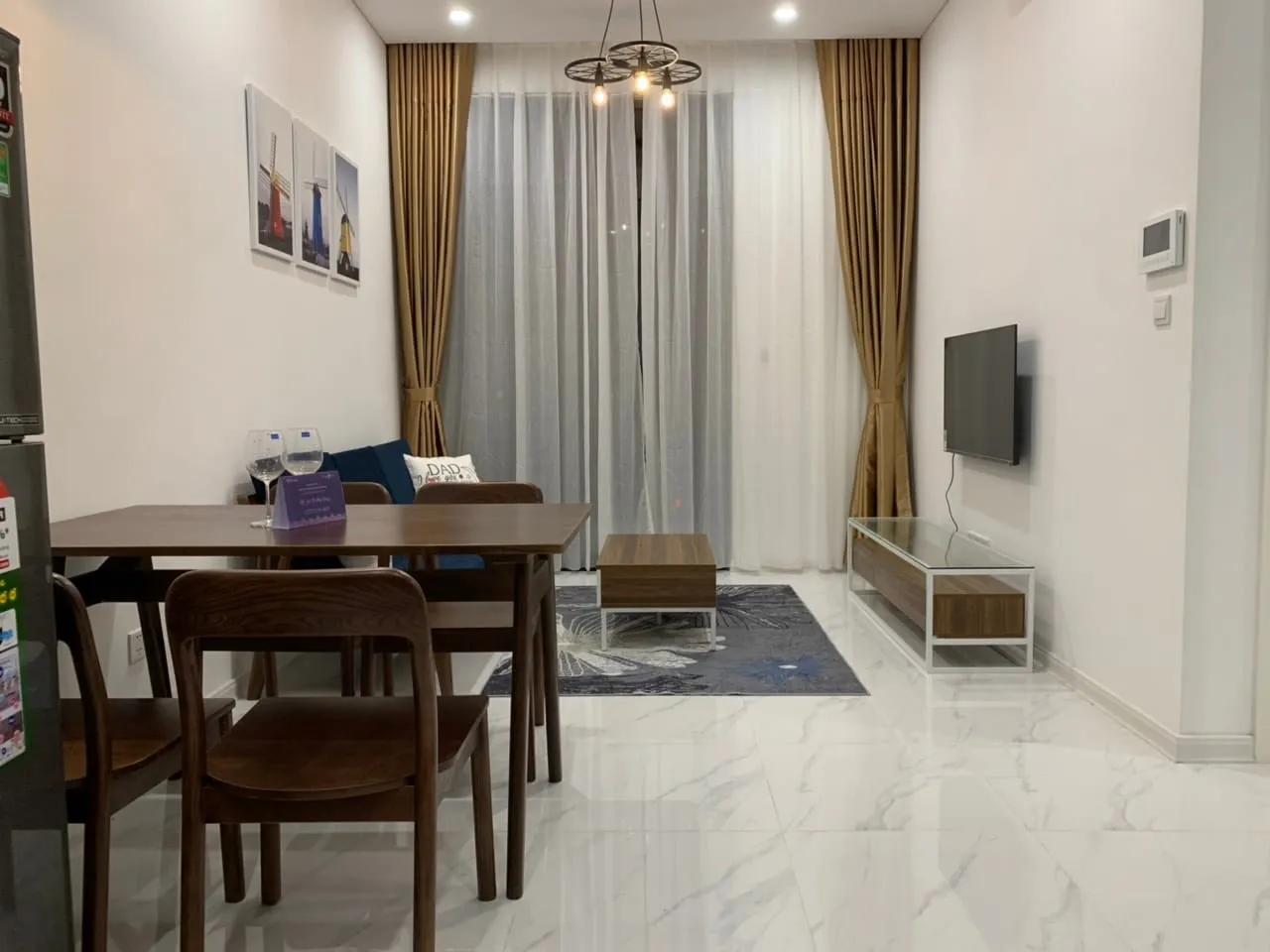
Yield comes from a unit that actually lets. This one is in My Dinh Pearl.
CBRE’s 3.4% gross yield is not 3.4% in your account. Here is the walk down, expressed as a share of annual rent, using our published fees and stated assumptions rather than a market average:
| Line | Effect on annual rent |
|---|---|
| Gross rent | 100% |
| Property management, 4% of annual rent | −4% |
| Tenant sourcing, one month’s rent, payable only when a tenant signs | −4.2% per year on a two-year tenancy |
| One vacant month between tenancies, every two years | −4.2% per year |
| Subtotal before building charges, repairs and tax | ≈ 88% |
On those assumptions a 3.4% gross yield becomes roughly 3.0% before building service charges, repairs and any tax. Change the assumption on tenancy length and the picture moves more than the management fee does. A tenant who stays four years instead of two adds back around 4 percentage points of annual rent, which is more than the entire management fee. The full stack, line by line and with the one-off entry costs, is in what it really costs to own and rent out a Hanoi apartment.
That is the practical argument for tenant quality over headline rent. The cost of churn outweighs the cost of management.
Tax: Most Owners Now Fall Below the Threshold
This changed materially, and older guides have it wrong.
Under the old regime in Circular 40/2021/TT-BTC, an individual landlord paid 5% VAT plus 5% personal income tax on rental turnover once annual revenue passed VND 100 million, and the charge applied to the whole turnover.
Two laws passed on 10 and 11 December 2025 replaced that:
- Law 149/2025/QH15, amending the Law on Value Added Tax, effective 1 January 2026, raises the VAT threshold for households and individuals from VND 100 million to VND 500 million a year.
- Law 109/2025/QH15, the new Law on Personal Income Tax, effective 1 July 2026, raises the personal income tax threshold from VND 200 million to VND 500 million. For income from leasing real estate the rate is 5%, and assessable income is the portion of revenue above VND 500 million, not the whole amount.
The change in mechanism is as important as the change in the number. The old threshold was a cliff, where crossing it taxed everything. The new one behaves like an allowance.
VND 500 million a year is roughly USD 19,000, or about USD 1,600 a month of rent at early-2026 exchange rates. Most of the one and two-bedroom apartments we let in Hanoi sit below that line.
The same rules worked through at three rent levels are in the rental income tax guide, and whether your home country taxes the same income again is in do you pay tax twice on Vietnam rental income. Confirm your own position with a licensed Vietnamese tax advisor before you model it. Thresholds, exchange rates and your own circumstances all move.
Sources for the above: Baker McKenzie’s January 2026 client alert and EY Vietnam’s tax alert on Law 109/2025/QH15.
How Management Protects the Other Half of Return
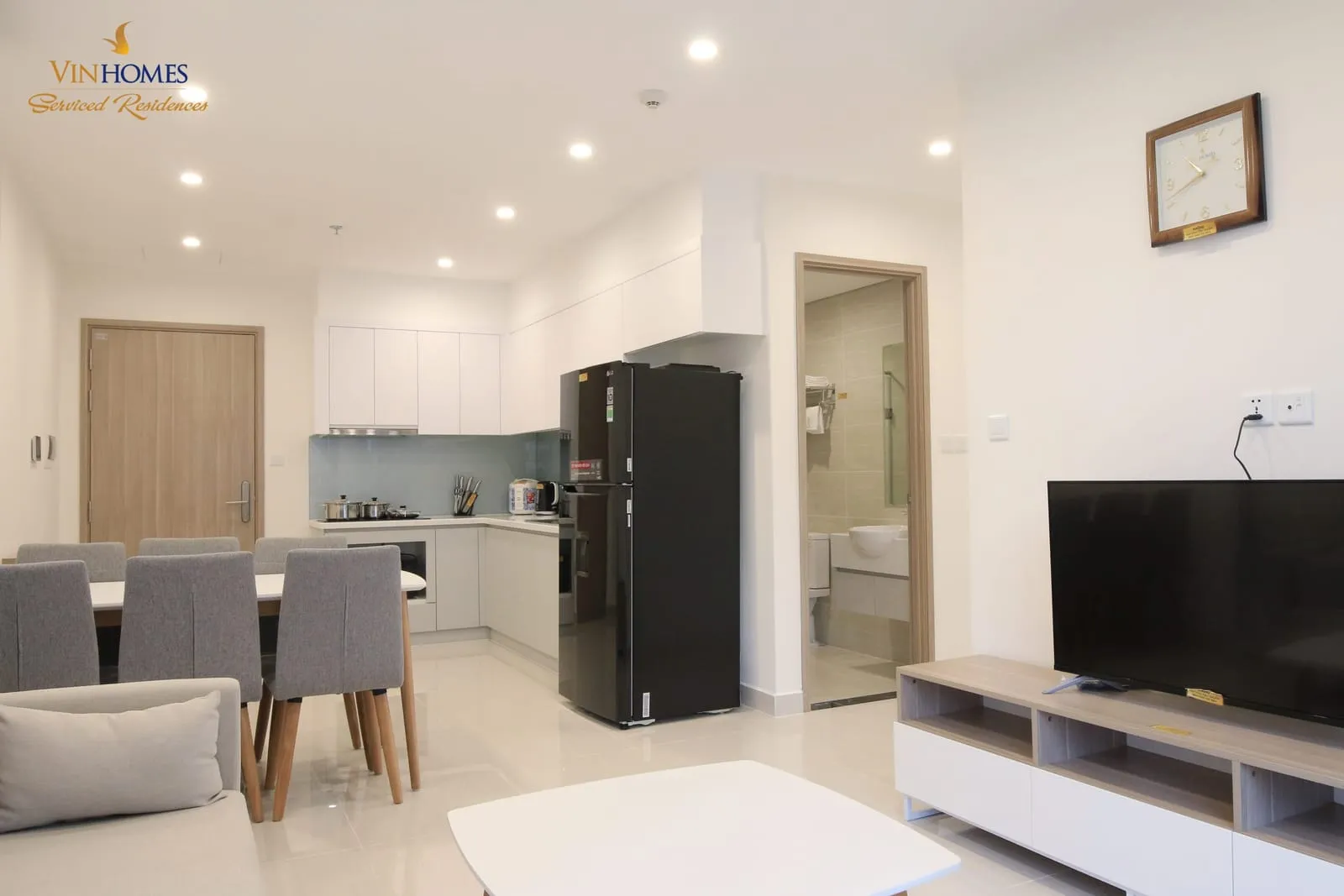
A poorly kept apartment loses both rent and resale value. Sky Park Residence, Cau Giay.
If the thesis is appreciation, the apartment has to arrive at the exit in sellable condition. That is an operational problem, not a market one.
Condition damage compounds quietly in a remote-owned apartment. Water damage behind a unit that nobody inspects, an air conditioner run for two years without service, a tenant who repaints without asking. None of it appears in a monthly rent transfer, and all of it appears in the resale price.
The parts of management that protect resale value are the unglamorous ones: a documented condition baseline at onboarding, photographed inspections, written approval before spending, and a maintenance record you can hand to a buyer’s agent five years later.
Five Mistakes That Cost More Than the Management Fee
- Comparing gross yield across cities without adjusting. Bangkok’s 6.2% and Hanoi’s 3.4%, both from CBRE, carry different tax, service charge and vacancy profiles.
- Assuming rent will catch up to price. It has not for three years running. Model on today’s rent.
- Modeling a full year of rent. Vacancy and re-letting cost more than the management fee, and a model without them overstates net return by about 8% of annual rent, against 4% for the fee.
- Treating the ownership term as unlimited. A foreign individual holds for up to 50 years from certificate issuance, extendable once, which belongs in any long-hold model.
- Skipping the quota check. Quota is checked before a deposit, not after.
A Framework Before You Buy
- What is the thesis: appreciation, income, diversification, or future personal use? Hanoi answers the first well and the second poorly.
- What is the realistic tenant profile for this specific building, and how long do those tenants stay?
- What does the unit need before it can be let, and at what cost?
- Can you carry the apartment through six vacant months without being forced to sell?
- Who signs off on repairs, and against what documentation?
- What is the exit path, and who is the likely buyer?
Legal and Financial Reminder
Three rules in the Law on Housing 2023 shape return for a foreign buyer: ownership of no more than 30% of the apartments in a building (Article 19), a term of up to 50 years from certificate issuance, extendable once (Article 20), and eligibility conditions on who may own at all (Article 17). See our guide to the ownership rules.
This article is general information only and is not legal, tax, or financial advice. Consult a qualified Vietnamese lawyer, licensed tax advisor, or relevant financial institution before making investment decisions.
What to Ask Us About a Specific Building
If you are evaluating a Hanoi apartment, price the vacancy and the re-letting before you price the rent. Those two lines move net return more than anything else you control.
Read Why Invest in Hanoi Property, see Buy & Sell Advisory, or contact Cozyhome to discuss a specific building.