
Foreigners buy apartments in Vietnam under four hard edges: a 30% cap per building, a 50-year term, statutory eligibility conditions, and payment through the banking system. Each is written into the Law on Housing, not set by the developer.
Each can also void a purchase that has already been agreed. Check all four before a serious deposit leaves your account. This guide covers them in the order they matter for a Hanoi apartment.
What You Are Actually Buying
You do not own land in Vietnam. Nobody does. Land is owned by the people and administered by the State, and what changes hands is a right to use it.
For an apartment buyer that distinction is mostly theoretical, because you own the unit and share the land-use right with the building. It stops being theoretical in two places: your ownership runs for a fixed term rather than forever, and landed housing carries a separate and much tighter cap than apartments do.
The practical route for almost every foreign investor is an apartment in a commercial residential project that has been approved to sell to foreign buyers.
Rule 1: Foreign Ownership Quota Must Be Available
The foreign ownership quota is one of the first checks a buyer should make. It is written into the law, not a developer policy: under Article 19 of the Law on Housing 2023 (No. 27/2023/QH15), foreign organizations and individuals may own no more than 30% of the apartments in one condominium building. For landed housing — villas and townhouses — the limit is no more than 250 houses in an area with a population equivalent to one ward.
Decree 95/2024/ND-CP, effective 1 August 2024, sets out how the 30% is counted. Two details matter in practice: the cap applies per block in a complex where several towers share a podium, and it counts apartments, not floor area.
This matters in Hanoi because the quota in a desirable block fills, and it fills silently. A unit sits on the sales list either way. Nobody flags that the thirty percent is gone until the registration fails. Get written confirmation of remaining quota for your specific block and unit type before the deposit, and date it.
Rule 2: Foreign Ownership Runs 50 Years, Extendable Once
Article 20 of the Law on Housing 2023 sets the term for a foreign individual at no more than 50 years from the date the ownership certificate is issued, extendable once for up to another 50 years on request. The term is printed on the certificate, so it is a document you check rather than a promise you accept.
Two consequences follow from that wording, and both belong in a long-hold model.
The clock starts at certificate issuance. Not at contract signing, not at handover. On a Hanoi new-build those dates can sit years apart, and the gap is time you have already paid for but do not yet own against.
The extension is a single one. The ceiling is 100 years, not a rolling renewal. Nobody buying today reaches it, but the buyer you sell to in year fifteen is buying a shorter remaining term than you did, and that shows up in the price you get. Have a Vietnamese lawyer read the term and the renewal procedure for your specific project.
Rule 3: Eligibility Is Defined by Statute, and It Excludes Diplomats
Article 18 of the Law on Housing 2023 sets two conditions for a foreign individual. You must be permitted to enter Vietnam, and you must not be entitled to diplomatic or consular privileges and immunities.
That second condition catches people who assume their posting helps them. Accredited diplomatic and consular staff cannot own housing in Vietnam while they hold those immunities, however long they have lived in Hanoi and however familiar the market feels.
One provision runs the other way. A foreign individual married to an overseas Vietnamese who is permitted to enter Vietnam holds housing rights on the same basis as an overseas Vietnamese, which is a broader basis than the foreign-buyer regime. If that describes your household, raise it with your lawyer before you are structured into the 30% building quota of the Law on Housing unnecessarily.
Beyond eligibility, developers, notaries, banks and the registration office each ask for documents at different stages. Assemble the file early. It is the same file a bank will want years later when you remit rent or sale proceeds out of Vietnam.
Rule 4: Payments Are Made in VND, Through the Banking System
Vietnam property transactions settle in Vietnamese dong. Plan how funds will be converted, transferred, documented and matched to the purchase contract, and route them through the banking system rather than any informal channel.
The reason is not compliance for its own sake. Every later step depends on this paper trail: the ownership certificate, the tax filing when you let the apartment, and above all the day you want to move money back to Hong Kong, Singapore, Taipei or Seoul. A bank asked to remit sale proceeds will reconstruct the whole history from the inbound transfers. Money that arrived without documentation is the hardest kind to send home.
Rule 5: Not Every Project Is Open to Foreign Buyers

Quota is per building, not per city. Check the specific tower. This unit is in D’Capitale on Tran Duy Hung.
Eligibility sits with the project, not with the buyer. A development has to be approved to sell to foreign buyers at all, and some are not: land near defense installations, border areas, islands and zones restricted on security or planning grounds.
This is a yes-or-no question with a documentary answer, so ask for the document rather than the assurance. A developer who has sold to foreign buyers before will produce it without hesitation. One who has not will discover the process on your transaction, at your pace and your cost.
What to Check Before You Sign
A sales brochure is a marketing document. Seven things need checking against paperwork, and the first two are the ones that kill a deal outright:
- Is the project approved to sell to foreign buyers? Yes or no, on paper.
- How much of the 30% is left in this block? In writing, dated, for the block rather than the development.
- What has this developer delivered, and how late? Published Hanoi timelines slip. Metro Line 3 broke ground in 2010 for a 2016 opening and carried its first passenger in 2024.
- What does the sale contract say about the handover standard? Bare shell and fully fitted are both called “handover” in Hanoi, and the difference is thousands of dollars of furnishing.
- Is the quoted price VAT-inclusive? Normally yes for a new apartment from a developer. Where it is not, the purchase costs 10% more than the price list says.
- What is the service charge, and what has it done over three years? This is the cost you carry every month and cannot renegotiate. One building’s published schedule, and when billing starts, is in building service and utility charges.
- When does the ownership certificate issue? Your 50-year term starts from that date, not from handover, and the gap between the two can run to years.
Buy & Sell Advisory covers this review.
What Happens After You Own It
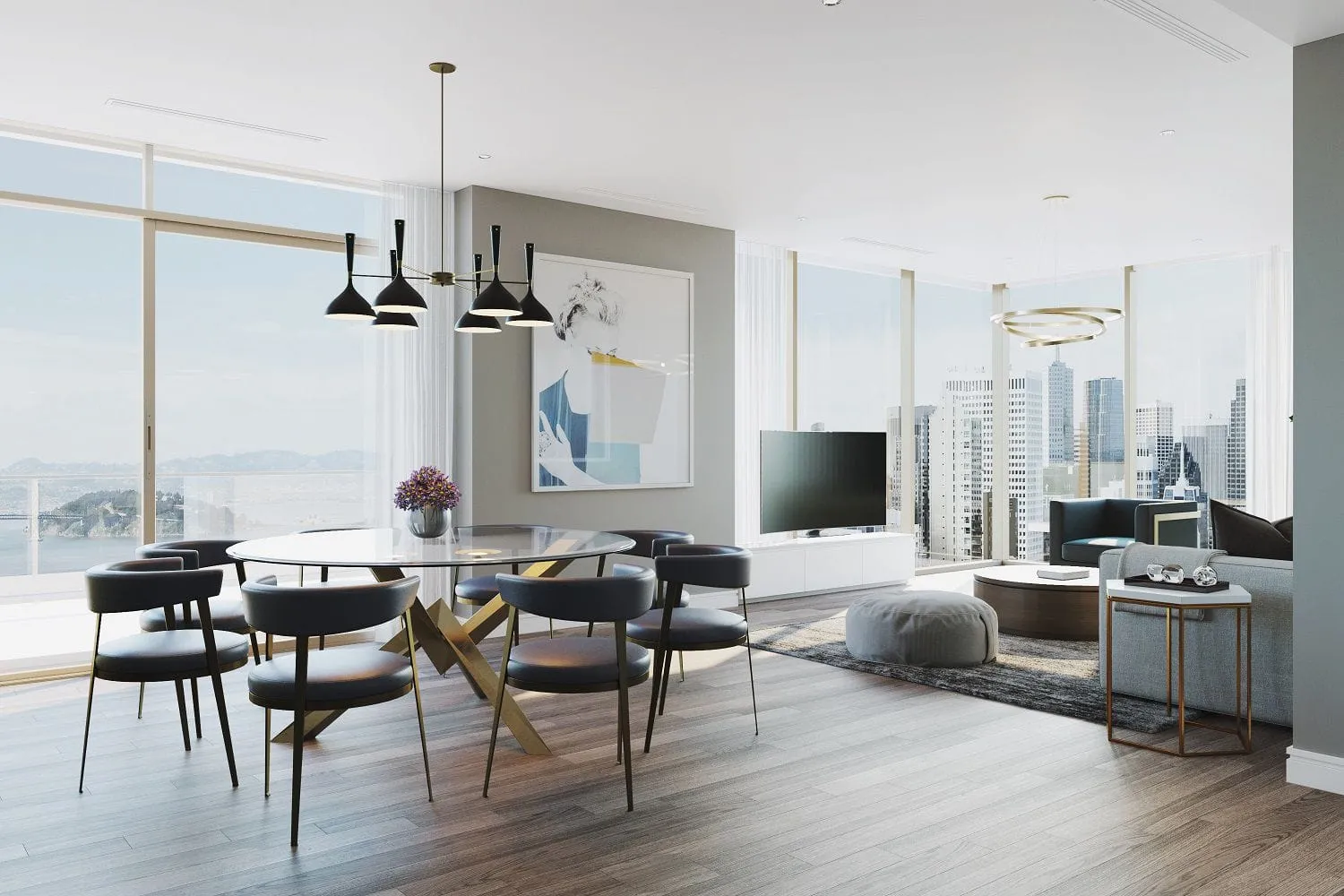
After handover the work becomes operational. See Property Management. Unit shown: The Nine Tower.
Buyers plan the purchase in detail and the ownership hardly at all. The purchase takes months. The ownership takes decades.
What arrives next is a handover inspection against the contract while the developer is still liable for defects, a furnishing budget before the unit can be let, a tenant, Vietnamese utility accounts, repairs, and a tax position that now applies to you. Every one of those needs someone in Hanoi.
That is the whole argument for local management, and the arithmetic belongs in the purchase decision rather than after it. See Property Management, at 4% of annual rent.
Tax and Remittance Considerations
If you rent out the apartment, you have Vietnamese tax obligations, and the rules changed at the end of 2025. Guides still quoting a VND 100 million threshold are describing a regime that has been replaced.
Under Circular 40/2021/TT-BTC, an individual landlord paid 5% VAT plus 5% personal income tax on rental turnover, 10% in total, once annual revenue passed VND 100 million. The charge fell on the entire turnover, not on profit after costs.
Two laws passed on 10 and 11 December 2025 changed both the threshold and the way it works:
- Law 149/2025/QH15, amending the Law on Value Added Tax, took effect on 1 January 2026 and raised the VAT threshold for households and individuals from VND 100 million to VND 500 million a year. It also abolished the presumptive method previously set out in Article 12.3 of VAT Law 48/2024/QH15.
- Law 109/2025/QH15, the new Law on Personal Income Tax, takes effect on 1 July 2026 and raises the personal income tax threshold from VND 200 million to VND 500 million. Leasing real estate is taxed at 5%, and assessable income is the portion of annual revenue above VND 500 million.
Note the two different effective dates. The VAT side moved in January 2026, the personal income tax side moves in July.
The mechanism matters as much as the figure. The old threshold worked as a cliff: cross it and the whole turnover was taxable. The new one behaves like an allowance, with tax falling only on the excess. VND 500 million is roughly USD 19,000 a year, or about USD 1,600 a month of rent at early-2026 rates, which places most of the one and two-bedroom apartments we let in Hanoi below the line.
Tax is still charged on rent received rather than on profit, so a vacant month reduces the bill while a repair bill does not. And if you transfer rental income or sale proceeds overseas, the bank will ask for the paper trail: lease, tax receipts and purchase contract. That is why the documentation habit matters from day one. Three rent levels worked through are in the rental income tax guide.
For the underlying analysis see Baker McKenzie’s January 2026 client alert and EY Vietnam on Law 109/2025/QH15. Confirm your own position with a licensed advisor before relying on any of it.
For legal, tax, and transfer matters, consult a qualified Vietnamese lawyer, licensed tax advisor, or relevant financial institution. We keep the local document file in order through Legal & Financial Support.
FAQ: Vietnam Foreign Ownership Rules
Can foreigners own land in Vietnam?
No. Nobody privately owns land in Vietnam; land is owned by the people and administered by the State. Foreigners own eligible residential property such as apartments in approved projects, subject to the quota and the 50-year term.
What is the foreign ownership cap for apartments?
30% of the apartments in one condominium building, under Article 19 of the Law on Housing 2023 — counted per block where towers share a podium. Landed housing is capped at 250 houses per ward-sized area. Always confirm remaining quota for the specific project in writing before paying a deposit.
How long can foreigners own property in Vietnam?
Up to 50 years from the date the ownership certificate is issued, extendable once by up to 50 more years (Article 20, Law on Housing 2023). The term must be written on the certificate. Confirm the term and renewal process for your project with a qualified lawyer.
Can a foreign owner rent out a Vietnam apartment?
Yes, subject to lease, registration and tax requirements. Under Law 109/2025/QH15, effective 1 July 2026, personal income tax on leasing runs at 5% on the portion of annual revenue above VND 500 million. Law 149/2025/QH15, effective 1 January 2026, applies VAT above the same threshold. Rent below that line is outside both.
Can a diplomat buy an apartment in Vietnam?
Not while entitled to diplomatic or consular privileges and immunities. Article 18 of the Law on Housing 2023 makes that an explicit disqualification for foreign individuals, separate from the entry requirement.
How Cozyhome Helps Foreign Buyers
Two checks are worth doing before a deposit leaves your account: whether the building still has foreign quota, in writing, and what the sale contract says about the handover standard and the VAT treatment of the quoted price. Both are cheap to verify beforehand and expensive to discover afterward.
After that the work is operational. We manage 13 buildings in Hanoi, so we can also tell you how the specific building you are considering behaves once you own in it: what its management office is like, what a unit costs to make lettable, and how long a vacancy runs there.
Planning to buy in Hanoi? Contact Cozyhome for a quota and due diligence review before you pay a deposit.