
A Hanoi apartment costs a fraction of a Hong Kong one and behaves nothing like it. The entry price is why investors look; the ownership quota and the absence of anyone on the ground are why some lose money.
The quota fills without warning, and nobody is there to open a door for a plumber. This guide runs the sequence in order, for an investor who will stay in Hong Kong.
Why Hong Kong Investors Look at Hanoi
The arithmetic is the whole story. Hong Kong prices sit among the highest in Asia; Hanoi’s citywide average primary price was VND 78 million per square meter in Q4 2025, about USD 2,973, on CBRE’s figures.
What that buys is a different asset class from the one it resembles. Hanoi is a price-growth market with thin rental income, and treating it as a yield play is the most expensive mistake on this page.
The numbers behind that profile, from third-party market research rather than from us:
- Capital values moved hard. CBRE’s Q4 2025 Hanoi figures put average secondary apartment prices up 24% year on year, at VND 62 million per square meter. Primary prices averaged VND 78 million, around USD 2,973, up 8%.
- Yield is thin, and getting thinner. CBRE put Hanoi gross apartment yield at 3.4% in 2025, down from 5.1% in 2023. Prices rose 30–40% a year while rents rose 8–10%.
- Remote ownership is the operating constraint. You will not be in Vietnam, so management, reporting and maintenance coordination decide whether the asset performs.
For a Hong Kong investor used to comparing across the region, CBRE’s gross yields put Hanoi at 3.4% against Bangkok 6.2%, Kuala Lumpur 5.1% and Seoul 4.3%. Hanoi is not the income trade. Buy it for the price trajectory and the entry ticket, with rent covering holding costs, or buy something else.
Supply is worth knowing before you assume scarcity supports prices. Hanoi launched close to 36,000 condominium units in 2025, the second-highest year on record, sold 34,760, and CBRE forecasts about 33,000 more in 2026. Market figures move with the cycle and are not a forecast from us.
Step 1: Define Your Investment Goal and Budget
Before looking at projects, clarify what you want the Hanoi apartment to do in your portfolio. Most Hong Kong investors are not buying for personal use. They are buying for diversification, potential appreciation, and optional rental income while waiting for the asset to mature.
For the ticket size, work from price per square meter rather than a headline budget. Applying CBRE’s Q4 2025 figures to a 70 m² two-bedroom, the size most expat tenants want:
| Segment | CBRE price per m² | 70 m² unit |
|---|---|---|
| Secondary, citywide average | VND 62 million | ≈ USD 167,000 |
| Primary, citywide average | VND 78 million | ≈ USD 210,000 |
| Primary, core districts | VND 90–100 million | ≈ USD 242,000–269,000 |
Converted at roughly 26,000 VND to the dollar, and these are CBRE’s market averages rather than a quote from us. A 50 m² unit runs about USD 119,000 on the secondary average, which is where the older “USD 100,000 buys a Hanoi apartment” line came from before three years of price growth.
Then add what the price does not include: furnishing from $4,000, the closing costs below, empty months, and management.
Closing costs deserve itemizing rather than a single percentage, because the largest line is normally already inside the price you were quoted:
- VAT, 10% under the Law on Value Added Tax — applies to a new apartment sold by a developer, and developer price lists for the Hanoi projects we see normally quote VAT-inclusive. Ask which it is before you budget: the difference is 10% of the purchase price.
- Building maintenance fund, 2% of the apartment value excluding VAT — required by Article 152 of the Law on Housing 2023. One-off, paid at handover, and it is the building’s money, not the developer’s.
- Registration fee, 0.5% of value under Decree 10/2022/ND-CP, paid when the ownership certificate is issued.
- Notary fee — a statutory scale set by Circular 257/2016/TT-BTC, not a number the notary sets. A VND 5 billion apartment falls in the band charging VND 3.2 million plus 0.04% of the amount above VND 5 billion, so roughly VND 3 million, under 0.1% of the price. The scale caps at VND 70 million.
So on a VAT-inclusive quoted price, expect roughly 2.5–3% on top. If VAT is excluded from the quote, the same purchase lands closer to 12–13%. Confirm the treatment in the sale contract before you transfer a deposit.
Step 2: Choose the Right Hanoi Area
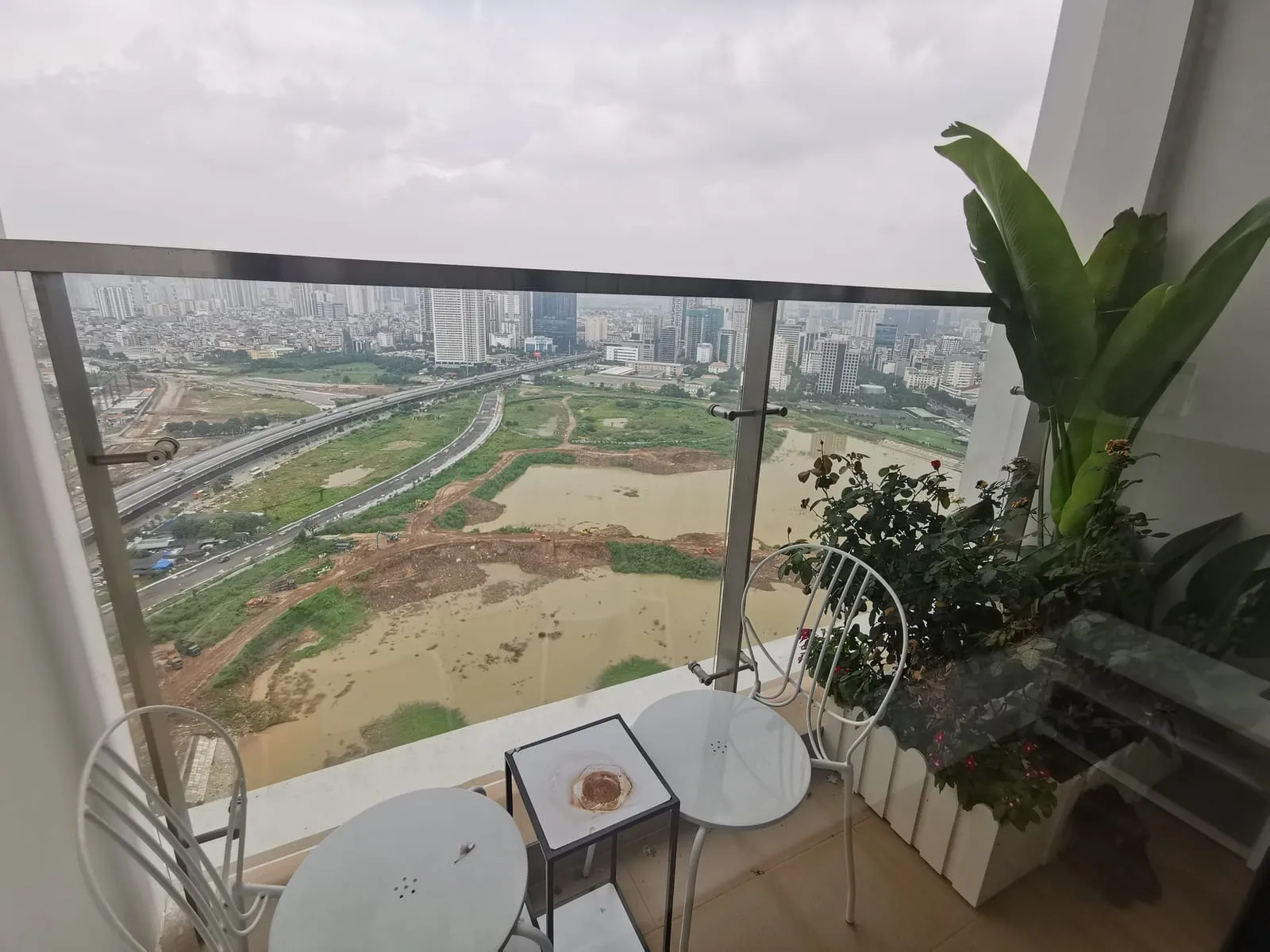
My Dinh draws Korean and Japanese tenants. Unit in Vinhomes Skylake — see all 13 buildings we manage.
Location matters, but not all good locations serve the same purpose. A foreign investor should compare both current rental demand and future value drivers.
Rather than rank every district here, it helps to know where the expat rental market is actually concentrated. The 13 buildings we manage sit in three clusters:
- Tay Ho and Tay Ho Tay — West Lake, international schools and embassies; the area foreign tenants recognize first. Starlake, 6th Element and D’El Dorado are here.
- Cau Giay — office workers and younger professionals, on the metro corridor: Mipec Rubik 360, Sky Park Residence, The Nine.
- My Dinh, western Hanoi — Hanoi’s Korean quarter and our largest cluster: The Matrix One, Vinhomes Skylake, West Point, The Zei and My Dinh Pearl.
Areas east and north of the river — Long Bien, Gia Lam, Dong Anh — come up for entry price and infrastructure plans, but they carry more developer and handover risk, and expat tenant demand there is thinner today.
For a district-by-district comparison, including who each area suits, read Best Districts in Hanoi for Foreign Property Investment. For broader market context, see Why Invest in Hanoi Property.
Step 3: Check Foreign Ownership Quota Before Paying a Deposit
This is one of the most important steps for any foreign buyer. Foreigners can buy eligible apartments in Vietnam, but ownership is capped by law: no more than 30% of the apartments in one condominium building, and no more than 250 landed houses in a ward-sized area — Article 19 of the Law on Housing 2023, with the counting rules in Decree 95/2024/ND-CP. Where several towers share a podium, the 30% is counted per block. The ownership term for a foreign individual is up to 50 years from certificate issuance, extendable once (Article 20) — see our guide to the ownership rules.
Before paying a deposit, ask for written confirmation that foreign ownership quota is still available in the building. Do not assume that because a unit is advertised, it is automatically available for foreign ownership. In popular Hanoi projects, quota can fill quickly.
This guide is general information only. For a specific transaction, consult a qualified Vietnamese lawyer or licensed professional before signing binding documents.
Step 4: Run Due Diligence on the Project and Developer
A good unit in a badly run building becomes your problem every month for as long as you own it. Six things are worth establishing before you commit, and each has a specific failure attached:
- What the developer has actually delivered before, and when. Announced handover dates in Hanoi slip. Metro Line 3 started in 2010 for a 2016 opening and ran its first train in 2024, which is the local calibration for any published schedule. What a Hanoi site looks like a month before its first handover is in Lumi Hanoi handover progress.
- Foreign quota remaining in this specific block, in writing. Not the project. The block. See step 3.
- The service charge, and its history. This is the recurring cost you cannot renegotiate later, and a building that has raised it twice in three years will do it again. What a building’s actual schedule looks like, and that billing starts at handover rather than at the first tenancy, is in building service and utility charges.
- How many units in the block match yours. A 496-apartment building like Sky Park Residence puts far fewer identical competitors in front of your tenant than a 1,700-unit development does.
- Who the current tenants are. Walk the lobby at 7pm. The tenant profile you see is the one you will be letting to.
- What sold recently, not what is listed. Asking prices in a half-sold tower tell you what the developer wants, not what a buyer will pay you in five years.
For local support during sourcing and due diligence, see Buy & Sell Advisory.
Step 5: Move the Money So You Can Move It Back
Vietnam property settles in Vietnamese dong, and the currency step is where Hong Kong investors create problems for their future selves.
The rule is simple: every dong that buys the apartment should arrive through the banking system, in your name, matched to the purchase contract. Not through a relative’s account, not in cash, not through a friend’s company.
The reason shows up years later. When you sell and ask a Vietnamese bank to remit the proceeds to Hong Kong, the bank reconstructs the entire history from the inbound transfers. Money that arrived cleanly goes home cleanly. Money that arrived informally is the hardest kind to repatriate, and by then the fix is expensive or unavailable.
Confirm the mechanics with your bank before the first transfer rather than after.
Step 6: Budget the Gap Between Handover and Lettable
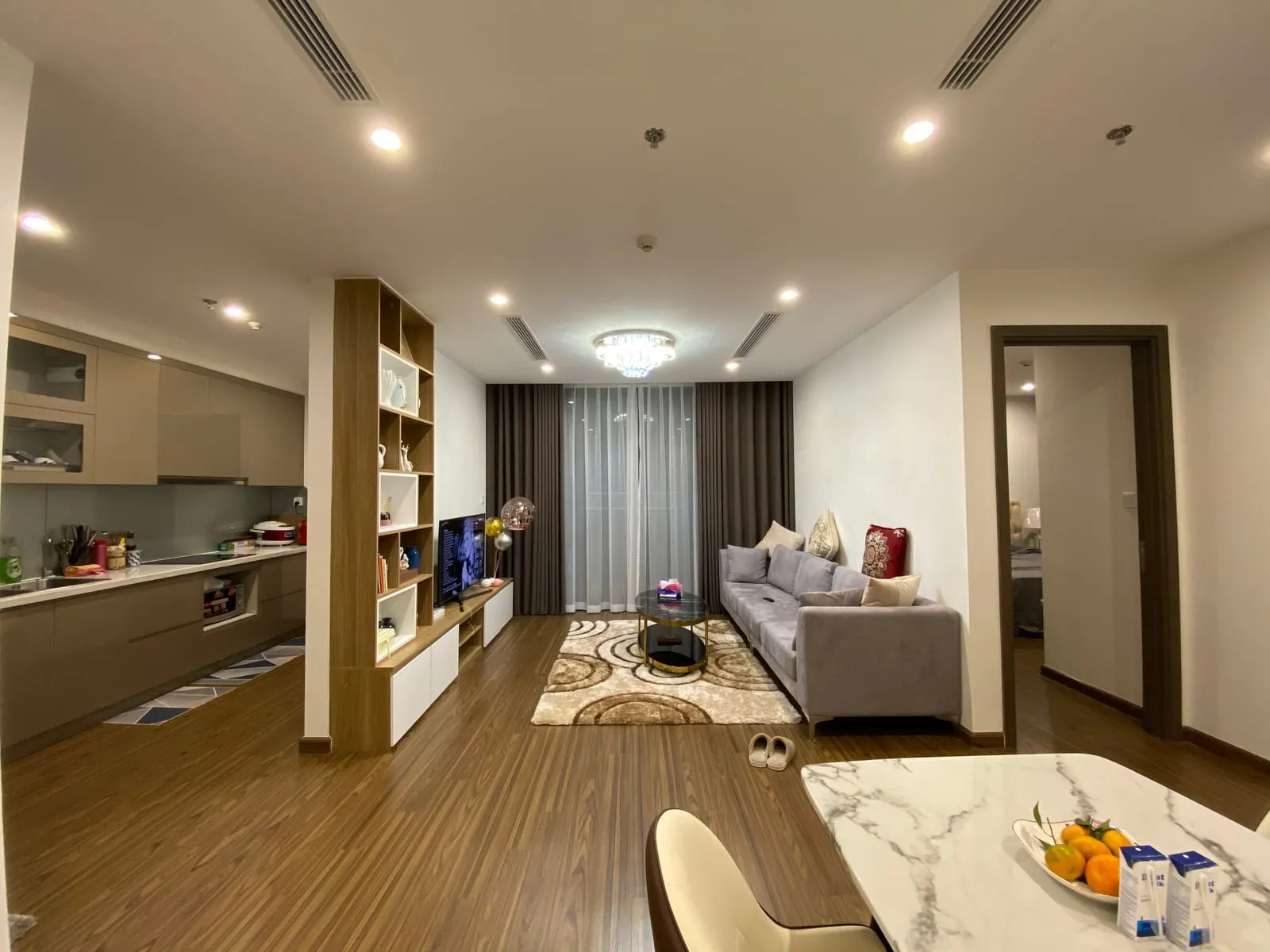
Furnishing is what makes a unit lettable to the expat market. Vinhomes West Point, furnished by our team.
A new Hanoi apartment is handed over in a state no expat tenant will rent. Depending on the contract that can mean bare concrete, or it can mean floors, sanitary ware and a kitchen with nothing else. Read your purchase contract for the handover standard, because the developer’s showroom is not it.
Our furnishing packages run from $4,000 for a one-bedroom, $5,000 for two and $6,000 for three, which covers the furniture, appliances, soft furnishings and kitchen a unit needs to compete in the expat market. Budget it as part of the purchase, not as an afterthought, and add the months it takes.
The harder part from Hong Kong is not the money. It is that someone has to inspect the handover against the contract, list the defects while the developer is still liable, let contractors in, check what arrives against what was ordered, and photograph the finished unit. See Interior & Furnishing.
Step 7: Set Up Management Before the First Tenant

From here it is month-to-month operations. Property Management is 4% of annual rent. Unit in 6th Element.
From Hong Kong you can approve things. You cannot open a door for a plumber, argue with a building management office in Vietnamese, or read an electricity bill that arrives as a paper slip under the door.
That division is what management buys: you keep the decisions, someone local executes them. In practice that means finding and screening the tenant, running the lease and the move-in record, collecting rent and telling you when it is late, handling repairs against an approval threshold you set, watching the utility accounts, inspecting the apartment with photographs, and sending you one statement a month in English.
Ours costs 4% of annual rent, with tenant sourcing at one month’s rent payable only when a tenant signs. There is no setup fee and no percentage added on top of repairs, which matters more than it sounds: a manager who earns a cut of every invoice is being paid to find work for contractors. See Property Management.
Step 8: Review Tax, Reporting, and Remittance
If your apartment is rented out, you have tax and reporting obligations in Vietnam. Model them on the December 2025 laws, not on the older guidance still circulating.
The previous position under Circular 40/2021/TT-BTC was 5% VAT plus 5% personal income tax on rental turnover above VND 100 million a year, charged on the whole turnover.
What replaced it:
- Law 149/2025/QH15, amending the Law on VAT, effective 1 January 2026: VAT threshold for households and individuals raised to VND 500 million a year.
- Law 109/2025/QH15, the new Law on Personal Income Tax, effective 1 July 2026: threshold raised to VND 500 million, leasing taxed at 5%, applied to the portion of revenue above the threshold rather than to all of it.
VND 500 million is roughly USD 19,000 a year, or about HKD 12,500 a month of rent at early-2026 rates. For a single one or two-bedroom Hanoi apartment that will often mean no Vietnamese rental tax at all, which changes the net return materially against models built on the old 10%. The threshold applies per person rather than per apartment, so a second unit changes the calculation. The worked table is in the rental income tax guide, and whether Hong Kong taxes the same rent again is in do you pay tax twice on Vietnam rental income.
See Baker McKenzie, January 2026 and EY Vietnam for the underlying analysis, and confirm your own position with a licensed advisor.
If you later transfer rental income or sale proceeds to Hong Kong, expect the bank to ask for the full file: purchase contract, lease, tax receipts and transfer records.
Do not rely on informal advice for tax or remittance. Rules can depend on your ownership structure, residency, lease terms, bank, and documentation. Consult a qualified Vietnamese tax advisor, lawyer, or relevant financial institution for your specific case.
Cozyhome can help coordinate documents and local support through Legal & Financial Support.
Common Mistakes Hong Kong Investors Should Avoid
- Paying a deposit before the quota check. If the block has hit the 30% cap set by the Law on Housing, no amount of goodwill registers you as owner. The deposit is at risk, not the developer’s.
- Modeling the return on rent. On CBRE’s gross yields, Hanoi pays 3.4% and Bangkok pays 6.2%. A spreadsheet built on rent argues for a different city.
- Reading the price list without asking about VAT. Developer quotes in Hanoi are normally VAT-inclusive. Where they are not, the same purchase lands 10% higher.
- Treating furnishing as optional. A bare handover unit does not let to expat tenants at all, so the $4,000 to $6,000 is part of the purchase price rather than an upgrade.
- Having no one in Hanoi. Not a friend, not a relative who visits. Someone whose job it is, with a phone number the tenant has.
- Letting money in informally. It is the one mistake here you cannot fix afterwards, and you discover it at the moment you try to take the proceeds home.
FAQ: Investing in Hanoi Property from Hong Kong
Can Hong Kong residents buy apartments in Hanoi?
Yes, on two statutory conditions in Article 18 of the Law on Housing 2023: you are permitted to enter Vietnam, and you hold no diplomatic or consular immunities. Beyond that the binding constraint is quota in the specific block. Confirm it in writing before a deposit.
Is Hanoi property better for capital appreciation or rental yield?
Appreciation. CBRE recorded secondary apartment prices up 24% year on year in Q4 2025 while gross yield sat at 3.4%, against Bangkok’s 6.2% and Seoul’s 4.3%. Rent covers holding costs here. It is not the return.
Can I manage a Hanoi apartment from Hong Kong?
The decisions, yes. The execution, no. Someone has to open the door for a contractor, speak Vietnamese to the building office and be reachable when a pipe goes at 2am.
Can rental income be transferred from Vietnam to Hong Kong?
Yes, where the paper trail supports it: purchase contract, lease, tax receipts and records of how the money entered Vietnam. Banks reconstruct the history before they remit. Funds that arrived informally are the ones that get stuck. Confirm the mechanics with your bank for your own case.
How Cozyhome Helps Hong Kong Investors
We manage apartments in 13 Hanoi buildings across Tay Ho Tay, Cau Giay and My Dinh, for owners in Hong Kong, Singapore, Taiwan and Korea. That means we can tell you how a specific building behaves rather than how the market behaves: what its management office is like to deal with, what a unit costs to make lettable, and how long a vacancy runs there.
Two things are worth checking before your deposit leaves Hong Kong, and both are cheap now and expensive later. Whether foreign quota remains in that block, in writing. And whether the quoted price includes the 10% VAT under the Law on Value Added Tax, because the answer moves your budget by that much.
Send us the building and the layout and we will tell you what owning it actually involves: Contact Cozyhome.